
We are aware of fraudulent emails and messages falsely claiming to be from CAA Atlantic. These scams may look official and use CAA branding, but they are not legitimate.
Below are two known scams currently targeting members, along with tips on how to stay safe and report fraud.
Scam #1: Fake Vehicle Safety Regulation Email
What the scam claims:
- A new federal motor vehicle safety regulation has come into effect
- All vehicle owners must carry a “certified rescue tool”
- Failure to comply could result in a fine (e.g. $200)
- CAA is directing you to click a link for more information or compliance
The truth
- This email is not from CAA Atlantic
- There is no such regulation
- CAA will never threaten fines or demand urgent action by email
These messages often attempt to create fear or urgency to get you to click a fraudulent link.
Scam #2: “Free Emergency Care Kit” Offer
What the scam claims:
- Offer a “free” emergency care kit or safety kit from CAA
- Encourage you to click a link to “claim” or “confirm shipping”
- Ask for personal details such as your address, email, or payment information
- Appear as an email, social media post, or sponsored ad
The truth:
- CAA Atlantic is not offering free emergency care kits through unsolicited emails or ads
- Requests for personal information to claim “free” items are a common scam tactic
- If an offer sounds too good to be true—especially when it asks you to click a link—it likely is.
How to Tell if an Email Is Legitimately from Caa
Before clicking anything, check for all of the following:
Legitimate CAA Atlantic emails WILL:
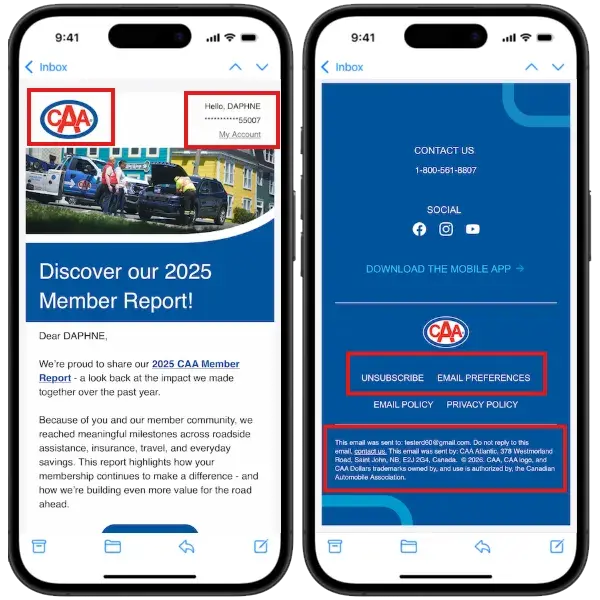
- Come from CAA Atlantic at
hello@info.atlantic.caa.ca - Be personalized with your first name
- Use clear, professional grammar and spelling
- Display the last 5 digits of your CAA card number in the top right‑hand corner
- Contain no attachments
- Link only to atlantic.caa.ca
(Hover over links or buttons to check before clicking) - Include a full footer with:
- Unsubscribe / Preference Centre options
- The email address the message was sent to
- Sender information:
CAA Atlantic
378 Westmorland Road
Saint John, NB E2J 2G4
Canada
What to Do If You Receive a Suspicious Email or Offer
If you believe a message may be fraudulent:
- Do not click any links or buttons
- Do not reply
- Do not provide personal or financial information
- Report fraudulent emails and online scams to the Canadian Anti‑Fraud Centre
- Delete the message